
 EN
EN
Understand Your Load Variability to Guide Wrapping Machine Selection
Classify loads using A/B/C profile analysis to align with adaptive wrapping machine capabilities
When organizing product lines, manufacturers often sort items into three basic groups: Group A consists of high volume products with consistent sizing, Group B includes those with moderate variations, and Group C covers the really irregular shapes. How these categories break down makes all the difference when picking wrapping equipment. For facilities where at least 80% of what they handle falls under Group A, turntable wrappers work just fine. But when dealing with the mixed bag of Group C items, most companies find that orbital arms or ring style systems handle the job much better. The real game changers though are adaptive machines featuring sensors that adjust on the fly and programming capabilities. These tend to pay off best in situations mixing Groups B and C together, where changeover times can drop around 25-30% versus traditional fixed setup systems according to field reports from several packaging plants across different industries.
Assess dimensional range, weight distribution, and stability risks across SKUs
When looking at all the different pallet sizes and weights that go through our system, we need to consider everything from the smallest fragile bottles that require gentle wrapping to those heavy industrial drums that demand extra reinforcement at the base. The numbers tell us something important too unstable loads are actually 40 percent more likely to tip over when they rotate, which means having sensors that detect tilting becomes pretty much mandatory these days. Getting this information upfront helps match equipment specs properly. Things like turntable size, how tight the clamps need to be, mast height adjustments, and tension settings should align with what our toughest products need, not just some generic average measurement.
Key Load Variability Metrics
| Factor | Low-Risk Example | High-Risk Example | Machine Adaptation Needed |
|---|---|---|---|
| Height Range | ¤1.5m (uniform boxes) | >2m (industrial pipes) | Adjustable mast height |
| Weight Distribution | Evenly loaded pallets | Top-heavy machinery | Centering clamps + bottom wraps |
| Fragility | Packed cartons | Glass bottles | Precision tension control (5–15N) |
Select the Right Wrapping Machine Type for Multi-Size Packaging
Compare turntable, orbital arm, and ring-style wrapping machines for flexibility with irregular, tall, or unstable loads
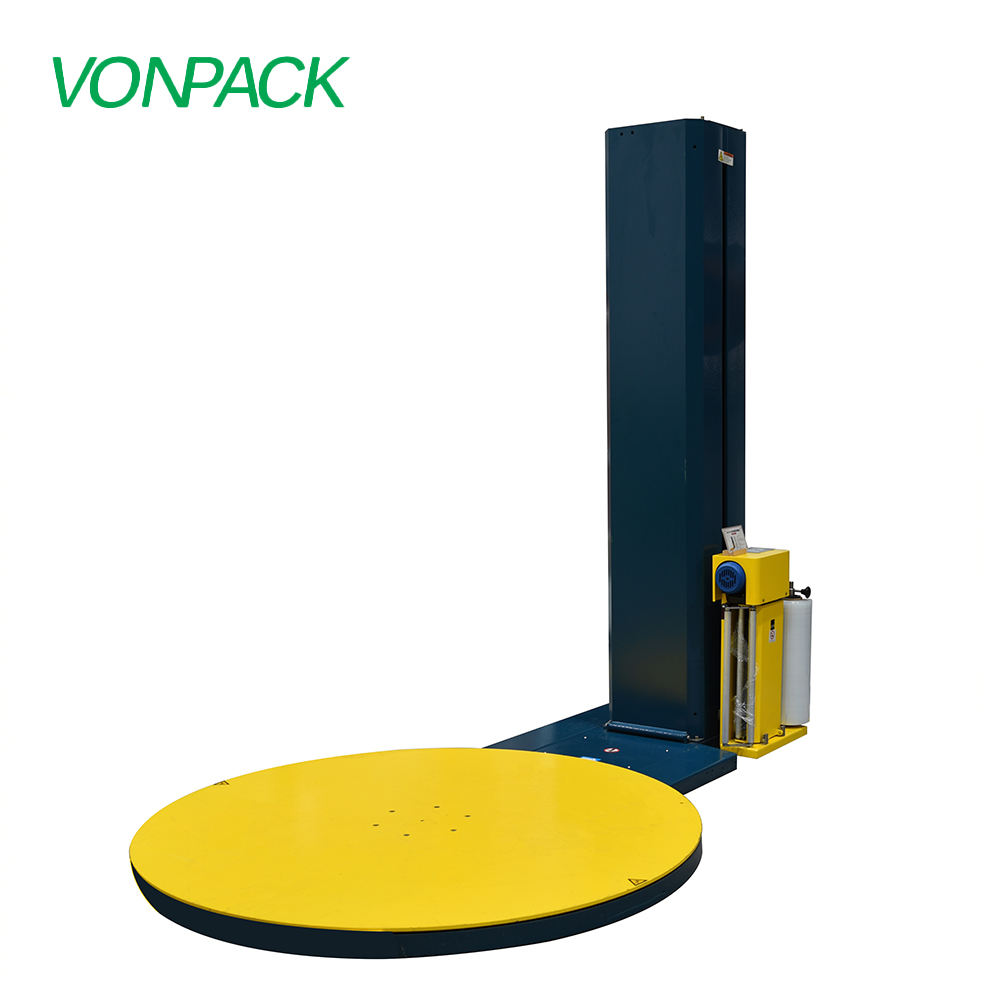
Turntable wrappers work by spinning the load on a platform while dispensing film from above. They handle stable, uniform pallets pretty well but struggle with anything taller than 1.8 meters or packages that tend to shift during wrapping. Orbital arm systems are different because they keep the load completely still while the machine circles around it. This setup works great for tricky items like tall cylinders, irregular shapes, or things such as barrels and heavy machinery parts that would be hard to rotate safely. Ring style machines go even further in keeping everything motionless. These systems wrap products with rotating rings of film around loads that stay absolutely still throughout the process. For fragile stuff like glass panels or sensitive medical equipment where even the slightest movement could cause damage, ring style is basically the only game in town. According to some tests mentioned in last year's Packaging Efficiency Benchmarks report, these ring systems cut down on film waste by about 15 percent compared to traditional turntables when dealing with oddly shaped or oversized packages.
Prioritize Key Adaptability Features in a Wrapping Machine
Adjustable Turntable Diameter and Wrap Zone Height: Ensuring Compatibility Across Pallet Sizes From 1.0m to 2.4m
Select machines with dynamically adjustable turntables and wrap zones to seamlessly accommodate pallets from compact 1.0m Euro pallets (120×80cm) to oversized 2.4m ISO configurations. Mechanical recalibration between formats adds downtime and error risk; touchscreen-driven adjustments—standard on leading adaptive platforms—cut average changeover time by 23%, per manufacturer field data.
Smart Load-Sensing Technology and Auto-Height Detection for Real-Time Wrapping Parameter Adjustment
The LiDAR systems along with those 3D vision sensors can actually spot the shape of loads in just half a second or so. This lets machines automatically tweak things like how tight the wrapping film is, where the wrap sits on the load, and how many layers get applied. The fast response time really matters when dealing with stuff that's wobbly or delicate. According to some recent data from the Packaging Efficiency Benchmarks report released in 2023, these automated systems cut down on film breaks by around 34 percent compared to what happens when people manually control everything. What's even better is that they keep compression levels steady throughout the whole process without needing someone standing there watching every move. And this works even when the line is moving pretty fast, handling over 60 pallets each hour without missing a beat.
Programmable Tension Control and Customizable Wrap Cycles to Prevent Film Waste and Load Failure on Non-Standard Packages
Pre-programmed tension curves respond intelligently to shifting load dynamics—applying gentle pre-stretch for lightweight cartons and progressive ramping for dense metal parts. For example:
- Lightweight cartons: 150% pre-stretch at low tension (5–8N)
- Dense metal parts: 250% pre-stretch with tension ramping to 12–15N
These tailored cycles reduce annual film waste by 19%, while keeping peak compression force below 50kgf—preventing crush damage in sensitive verticals like electronics and pharmaceuticals, where improper wrapping accounts for 27% of transit-related damage (2022 Supply Chain Study).
| Feature | Standard Machine | Adaptive Machine |
|---|---|---|
| Changeover Time | 8–12 minutes | <1 minute |
| Film Break Rate | 7.2% | 2.1% |
| Annual Film Savings | — | $740k (Ponemon Institute, 2023) |
FAQ
What are the categories A, B, and C in wrapping machine selection?
Group A consists of high volume products with consistent sizing, Group B includes products with moderate variations, and Group C covers irregular shapes.
What are the benefits of using adaptive machines over traditional wrapping machines?
Adaptive machines feature sensors that adjust on the fly, offering programming capabilities. They help reduce changeover times by 25-30% and film breaks by 34% compared to traditional systems.
Why is it important to have load-sensing technology in wrapping machines?
Load-sensing technology allows machines to adjust wrapping parameters in real-time, ensuring stability for wobbly or delicate loads, and reduces film waste and breaks significantly.
Table of Contents
- Understand Your Load Variability to Guide Wrapping Machine Selection
- Select the Right Wrapping Machine Type for Multi-Size Packaging
-
Prioritize Key Adaptability Features in a Wrapping Machine
- Adjustable Turntable Diameter and Wrap Zone Height: Ensuring Compatibility Across Pallet Sizes From 1.0m to 2.4m
- Smart Load-Sensing Technology and Auto-Height Detection for Real-Time Wrapping Parameter Adjustment
- Programmable Tension Control and Customizable Wrap Cycles to Prevent Film Waste and Load Failure on Non-Standard Packages
- FAQ