
 EN
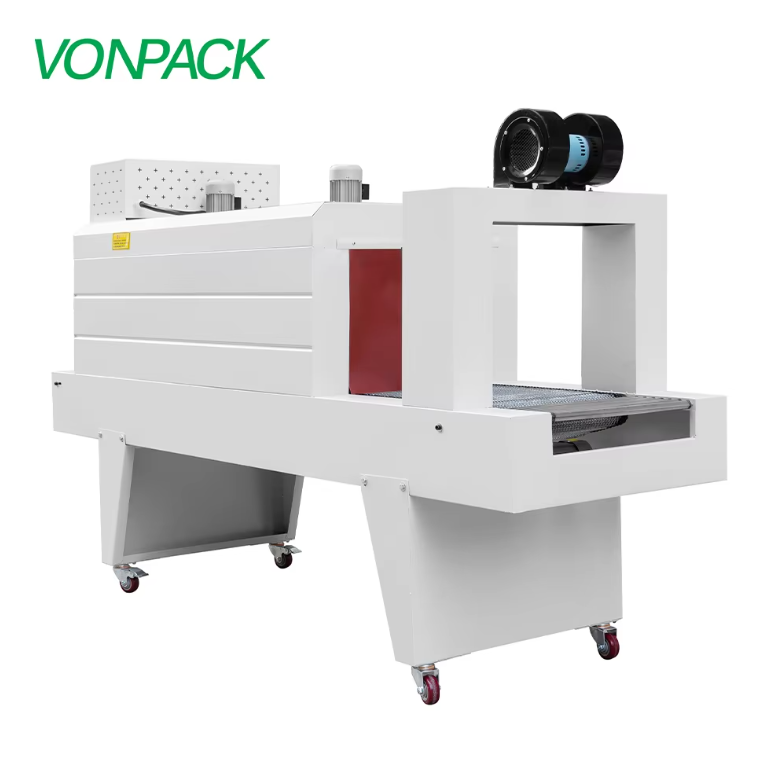
Matching Sealing Blade Metallurgy to Polymer Melting Points
Blaming a brand-new roll of plastic film when side seams split open or smoke rises from the sealing jaw is a classic packaging floor misdiagnosis. In reality, pairing the wrong polymer chemistry with an incompatible sealing bar architecture accounts for most chronic downtime on an automated shrink wrap machine. Different film families melt, sever, and weld through entirely different thermal mechanisms. Legacy polyvinyl chloride and standard multi-layer polyolefin center-folded films rely on narrow nichrome impulse wires or thin constant-heat knife edges that slice through two thin layers simultaneously while leaving a tiny bead weld along the seam. Heavy-gauge low-density polyethylene film, by contrast, cannot be cut cleanly with a bare nichrome wire without building up charred black polymer residue and snapping the element. Polyethylene requires a heavy-mass, polytetrafluoroethylene-coated alloy sealing bar paired with a pneumatic cold-knife cutoff or a broad overlap fusion zone inside the tunnel. Furthermore, film tensile modulus tested under ASTM D882 standards for thin plastic sheeting dictates how much unwinding tension the dancer rollers can apply before the web necks down or snaps ahead of the forming plow.
Coefficient of Friction, Folding Plows, and Tunnel Conveyor Belts
Before a film sleeve ever reaches the sealing station or the heat tunnel, the plastic web has to glide smoothly over stainless steel forming triangles, inversion plows, and idler rollers. How well the film tracks at fifty packs per minute depends on three physical interaction variables:
-
Kinetic coefficient of friction under ASTM D1894 benchmarks: High-slip polyolefin films formulated with erucamide or silica anti-block additives slide effortlessly over fixed folding plows on continuous-motion side sealers, whereas tacky, high-cling films grab the metal forming collar and cause severe web telescoping.
-
Tunnel conveyor belt configuration: Thin, high-clarity polyolefin pouches require rotating silicone-covered rollers or polytetrafluoroethylene mesh belts so hot air circulates cleanly underneath without leaving grill marks; heavy polyethylene beverage trays, however, need rugged stainless steel wire mesh or heavy chain-link belts that allow intense bottom air blasts to fuse the overlap seal.
-
Film gauge versus product weight ratios: Matching a fifteen-micron polyolefin film to a lightweight stationery box prevents carton crushing, while twenty-four-bottle water trays demand fifty-to-eighty-micron polyethylene to survive forklift transit without tearing at the bullseye openings.
Compatibility Matrix Between Shrink Film Grades and Machine Architectures
Aligning film polymer type, folding format, and thickness to the specific machinery architecture prevents both gummy sealing jaws and unstable pallet loads.
| Machine Architecture | Compatible Film Format & Polymer | Sealing & Cutoff Mechanism | Tunnel Belt & Airflow Design | Typical Packaging Application |
|---|---|---|---|---|
| L-Bar Sealer (Automatic/Semi-Auto) | Center-folded POF or PVC (12 to 25 microns) | PTFE-coated alloy blade or impulse wire | Silicone roller conveyor, omnidirectional louvers | Boxed cosmetics, books, bakery trays, electronics |
| Continuous Side-Sealer | Center-folded or flat POF (15 to 30 microns) | Rotary hot-wheel side seal + cross sealing bar | High-speed silicone rollers or mesh belt | Long moldings, pizza boxes, high-speed multipacks |
| Sleeve Wrapper (Bullseye Bundler) | Flat single-wound LDPE (40 to 100 microns) | Heavy constant-heat bar with cold-knife blade | Heavy steel mesh belt, high-thrust bottom air | Bottled beverages, canned goods, industrial drums |
| Lap-Seal High-Speed Wrapper | Flat single-wound POF or LDPE | Bottom static lap fusion + hot-knife cross cut | Vacuum belt infeed with dual-zone heat tunnel | Trayless multipacks, tissues, high-volume consumer goods |
The compatibility matrix above highlights a strict operational boundary: attempting to run a thick, single-wound polyethylene roll through a light-duty L-bar sealer built for thin center-folded polyolefin will gum up the sealing teflon tape within minutes and starve the thick film of the thermal mass needed to shrink tightly.
Field Lessons from a Pennsylvania Condiments and Household Goods Plant
Ignoring film slip additives and sealing bar compatibility can bring a high-speed packaging line to a halt during a major retail promotion. During a summer multipack conversion at a condiments and household chemical plant in central Pennsylvania, the procurement team switched from a nineteen-micron cross-linked polyolefin film to a cheaper, unverified blend to wrap six-packs of glass sauce jars on a continuous-motion side-sealer and heat tunnel. Within four hours of mounting the new rolls, two severe failures crippled output. First, the substitute film had an inconsistent kinetic coefficient of friction that exceeded zero point four; as the web pulled over the stainless steel folding triangle, the film dragged and stuttered, causing the rotary side-sealing wheel to burn jagged holes along the edge instead of a continuous seam. Second, the un-cross-linked resin melted onto the cross-sealing bar, forcing operators to stop the line every twenty minutes to scrape charred plastic off the blade with brass brushes. Consulting directly with packaging machinery engineers resolved the mismatch. The plant restored a low-COF cross-linked polyolefin film for the glass-jar retail multipacks on the side-sealer, while routing heavy twelve-jar wholesale warehouse trays to a dedicated heavy-duty polyethylene sleeve wrapper equipped with a steel-mesh conveyor. Line efficiency rebounded immediately, and sealing blade cleaning dropped back to once per shift.
Application Boundaries and Sourcing Pre-Tested Wrapping Machinery
Even when film chemistry and machine type match on paper, ambient plant temperatures and storage habits still matter. Storing polyolefin or PVC film rolls near sunny loading dock doors or boiler rooms triggers premature roll tightening on the core, creating uneven web edges that wander off the sealing line. Similarly, odd-shaped industrial hardware with sharp metal protrusions requires thicker puncture-resistant cross-linked films rather than standard retail grades.
For food, beverage, consumer goods, and industrial manufacturers seeking seamless harmony between packaging materials and equipment, VONPACK combines over a decade of machinery R&D with joint investment from Yongchuang Intelligence and German packaging engineering expertise. Before any system ships out, experienced professionals run comprehensive factory trials using actual production films to reveal and correct any wear, tear, or tension mismatches upfront, preventing costly repairs and downtime at inconvenient times.
Table of Contents
- Matching Sealing Blade Metallurgy to Polymer Melting Points
- Coefficient of Friction, Folding Plows, and Tunnel Conveyor Belts
- Compatibility Matrix Between Shrink Film Grades and Machine Architectures
- Field Lessons from a Pennsylvania Condiments and Household Goods Plant
- Application Boundaries and Sourcing Pre-Tested Wrapping Machinery