
 EN
EN
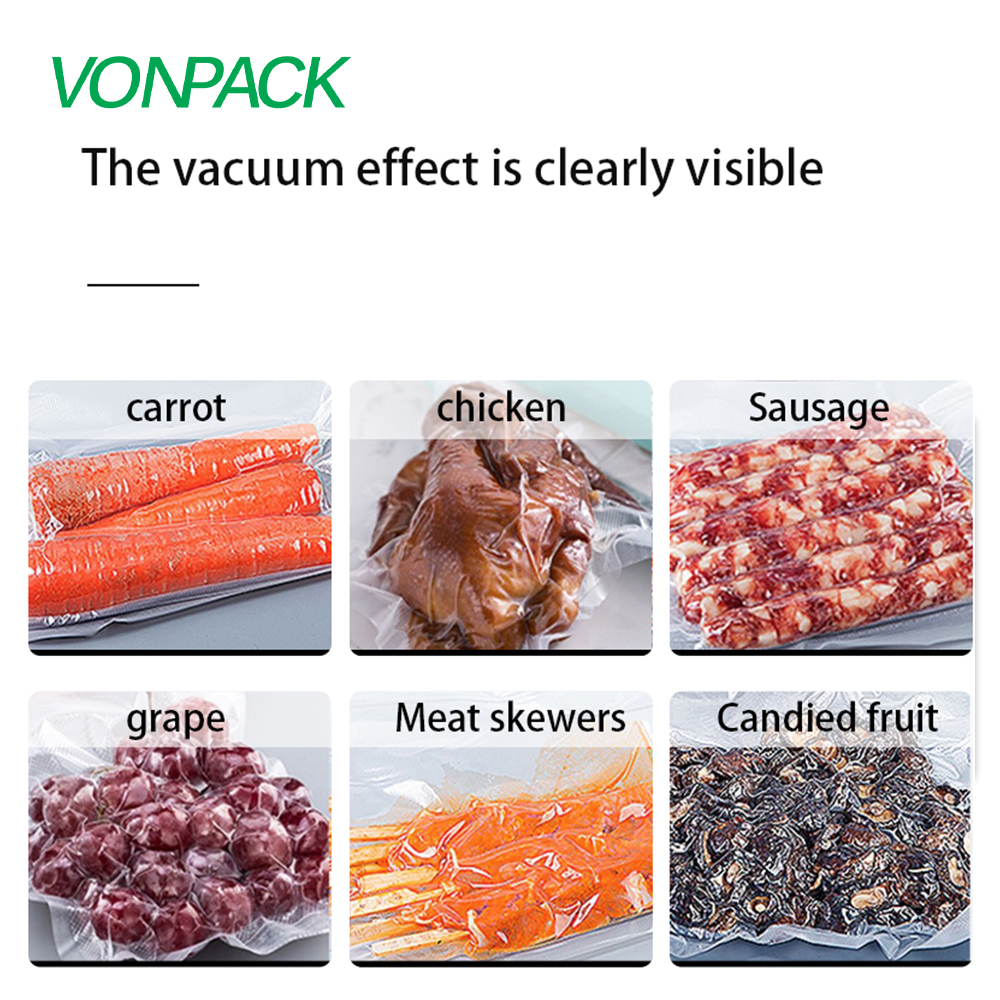
Why Chamber Vacuum Sealers Are Critical for Large-Scale Meat Packaging
Oxygen Removal and Shelf-Life Extension in Vacuum-Sealed Meat
Vacuum chamber sealers can pull out nearly all the oxygen from packaging, which creates conditions where most air-dependent bacteria can't survive and fats don't break down as quickly. Fresh meats stored this way last much longer in the fridge too. Take beef for instance it stays good quality and safe to eat for around 45 to 60 days after vacuum sealing, compared to just 10 or so days if left in regular packaging with air inside. Another big plus is how these machines stop freezer burn from happening when meat sits in the freezer for months. Food retains its juicy texture and doesn't lose those important nutrients over time either.
Superior Performance Compared to External Sealers for High-Moisture, High-Fat Proteins
External (impulse) sealers frequently fail with marinated poultry, pork belly, or other high-moisture, high-fat proteins due to liquid interference and inconsistent vacuum draw. Chamber systems overcome these limitations through:
- Integrated fluid management: Drainage channels divert juices away from sealing zones, preventing contamination and seal failure
- Uniform vacuum pressure: Stable 0.1–1 mbar levels regardless of product composition
- Robust dual-heating bar seals: Deliver hermetic closures even on textured or uneven bags
These features eliminate the 15–20% resealing rate common with impulse sealers–reducing waste, labor, and compliance risk in high-volume protein packaging.
Meeting Regulatory Standards Through Chamber Vacuum Sealing
Chamber vacuum sealers are engineered to support USDA 9 CFR 416, FDA Food Code, and HACCP compliance by delivering validated, repeatable process controls. Key built-in safeguards include:
- Precise, documented cycle parameters (vacuum level, time, temperature) for pathogen control validation
- Sanitary, fully welded 304/316 stainless-steel construction rated for daily high-pressure washdowns and compliant with USDA 3-A standards
- Automated reporting capabilities that generate auditable logs, cutting audit preparation time by up to 70% in regulated meat facilities
First-time implementation of a validated chamber system often serves as a foundational HACCP critical control point for vacuum-packaged meats.
Key Performance Factors in Selecting a Chamber Vacuum Sealer for Meat Processing
Chamber size (L) and cycle time (sec/batch): Optimizing throughput and batch consistency
The size of the chamber plays a big role in determining how much product can move through the line and whether operations stay smooth throughout the day. For regular retail applications, most facilities find that units ranging from 15 to 25 liters work just fine for their cutting needs. When dealing with larger primal cuts or whole trays of meat, though, operators usually upgrade to chambers over 40 liters in capacity. Getting cycle times down below 30 seconds per batch is really important for keeping production rolling without stops, particularly once daily output exceeds around 500 kilograms. Many processors have noticed that when they align chamber sizes with what their typical batches require, they end up changing equipment settings about 40% less often. This simple match between equipment and workload helps prevent those frustrating slowdowns that happen so frequently in busy processing plants.
Vacuum efficiency (mbar) and sealing bar durability under high-volume protein sealing
Effective oxygen removal from fatty meats requires consistent ₵5 mbar vacuum performance. Industrial sealing bars–built with nickel-chromium heating elements–maintain stable thermal output across 12-hour shifts and withstand 20,000+ cycles of high-moisture exposure. Dual-seal technology further isolates juice migration between batches, ensuring seal integrity across production shifts without operator intervention.
Stainless steel 304/316 construction for sanitary washdown and USDA-compliant environments
The frames made entirely of 304 or 316 stainless steel stand up well against corrosion caused by blood, saltwater solutions, and strong cleaning chemicals commonly used in food processing plants. Electrical parts rated IP65 can handle regular high pressure washing without issues. The welding is done seamlessly and all the inside corners are rounded out so there's nowhere for bacteria to hide or grow. Equipment built this way complies with USDA 3-A Sanitary Standards specifically for meat and poultry processing facilities. Plants that follow these guidelines see fewer contamination problems and stay on good terms with inspectors during their regular visits.
Automation integration: PLC controls, Ethernet/IP, and compatibility with labeling or conveyor systems
Today's chamber sealers work well within automated meat processing lines thanks to features like PLC controlled recipe storage, Ethernet/IP connections that let operators monitor vacuum levels and cycle times in real time, plus optional load cell integration for adjusting parameters based on weight measurements. When these machines sync up properly with labeling equipment or conveyor belts further down the line, they cut down on manual labor by around a quarter and maintain good seal quality even when switching between different products. Think ground sausages one minute and portion controlled steaks the next without compromising on consistency throughout production runs.
Single-Chamber vs. Dual-Chamber Vacuum Sealers: Matching Throughput to Production Scale
Throughput comparison: How dual-chamber systems boost hourly output by 30–50% in meat facilities
The dual chamber setup in vacuum sealers gets rid of those annoying wait times between cycles because basically one chamber is always working while the other is loading product. The result? Facilities see about a 30 to 50 percent boost in what they can process each hour compared to old school single chamber models, which makes a big difference when operations hit around 500 kilograms per day or more. What really matters though is that these machines keep the same vacuum pressure throughout both chambers, usually somewhere between 0.8 and 1.2 millibars. This consistency means every batch loses the same amount of oxygen, something absolutely essential for things like premium marbled steak cuts, fatty ground meats, and any product line aiming at longer shelf life without compromising quality.
Case study: Scaling from 200 to 1,200 kg/day using a dual-chamber vacuum sealer in a regional meat processor
One local food processing plant managed to boost their daily production capacity from just 200 kilograms all the way up to 1,200 kg once they switched out their old single chamber equipment for a new dual chamber system. The biggest change came when they started running both chambers at the same time which slashed their average batch processing time down from 45 seconds to barely 22 seconds. Plus, they installed automated conveyors that made loading and unloading completely hands off for workers. What did this mean in practice? Labor costs dropped by around 40% for every kilogram processed, products stayed fresh on store shelves for 15 extra days thanks to better preservation, and all packages met strict USDA standards for seal quality throughout their entire distribution network covering multiple states. And best of all, none of these improvements required expanding the factory floor or hiring more staff.
Evaluating Total Cost of Ownership for Industrial Chamber Vacuum Sealers
Operating costs: Energy use, maintenance schedules, and seal bar lifespan per 10,000 cycles
True operational economics hinge on three predictable variables:
- Energy consumption: At 0.8–1.3 kWh per cycle, a facility running 300+ cycles daily may incur ~$740/month in electricity (EnergyStar 2023)
- Preventive maintenance: Quarterly vacuum pump servicing and bi-annual gasket replacement cost ~$400/year–essential to avoid microbial ingress in USDA-regulated settings
- Seal bar longevity: Commercial nickel-chromium bars last 8,000–12,000 cycles under proper film selection and temperature control; premature wear occurs when sealing fatty meats above 90°C without barrier-grade film
ROI analysis: Break-even timeline when upgrading from semi-automatic to full chamber vacuum systems
Automated chamber vacuum sealers deliver payback in 14–18 months–driven primarily by labor reduction, yield improvement, and waste avoidance:
| Cost Factor | Semi-Automatic System | Industrial Chamber Sealer |
|---|---|---|
| Labor hours/day | 6.5 | 2 |
| Cycle throughput | 80 bags/hour | 240 bags/hour |
| Reject rate | 8–12% | <2% |
For processors handling 500+ kg/day, the combination of 30% higher yield retention, near-elimination of repackaging waste, and reduced staffing delivers rapid ROI–making the upgrade not just operationally sound, but financially imperative.
FAQ
What are the key benefits of using chamber vacuum sealers in meat packaging?
Chamber vacuum sealers offer several benefits, including extending the shelf life of meat by removing oxygen, preventing freezer burn, ensuring compliance with USDA and FDA regulations, and enhancing operational efficiency and throughput.
How do chamber vacuum sealers handle high-moisture and high-fat proteins?
These sealers are equipped with integrated fluid management systems, uniform vacuum pressure mechanisms, and dual-heating bar seals to handle high-moisture and high-fat proteins effectively, unlike external sealers.
What is the difference between single-chamber and dual-chamber vacuum sealers?
Dual-chamber vacuum sealers allow for continuous operation by alternating between chambers, thereby boosting throughput by 30-50% compared to single-chamber models.
What factors should be considered when selecting a chamber vacuum sealer?
Factors including chamber size, cycle time, vacuum efficiency, sealing bar durability, construction material, and compatibility with automation features are critical when choosing a sealer for meat processing.
How does upgrading to a full chamber vacuum system affect the total cost of ownership?
The total cost of ownership is influenced by energy consumption, maintenance requirements, and seal bar lifespan. Upgrading to a full system can provide rapid ROI through labor reduction, increased yield, and reduced waste.
Table of Contents
- Why Chamber Vacuum Sealers Are Critical for Large-Scale Meat Packaging
-
Key Performance Factors in Selecting a Chamber Vacuum Sealer for Meat Processing
- Chamber size (L) and cycle time (sec/batch): Optimizing throughput and batch consistency
- Vacuum efficiency (mbar) and sealing bar durability under high-volume protein sealing
- Stainless steel 304/316 construction for sanitary washdown and USDA-compliant environments
- Automation integration: PLC controls, Ethernet/IP, and compatibility with labeling or conveyor systems
- Single-Chamber vs. Dual-Chamber Vacuum Sealers: Matching Throughput to Production Scale
- Evaluating Total Cost of Ownership for Industrial Chamber Vacuum Sealers
-
FAQ
- What are the key benefits of using chamber vacuum sealers in meat packaging?
- How do chamber vacuum sealers handle high-moisture and high-fat proteins?
- What is the difference between single-chamber and dual-chamber vacuum sealers?
- What factors should be considered when selecting a chamber vacuum sealer?
- How does upgrading to a full chamber vacuum system affect the total cost of ownership?