
 EN
EN
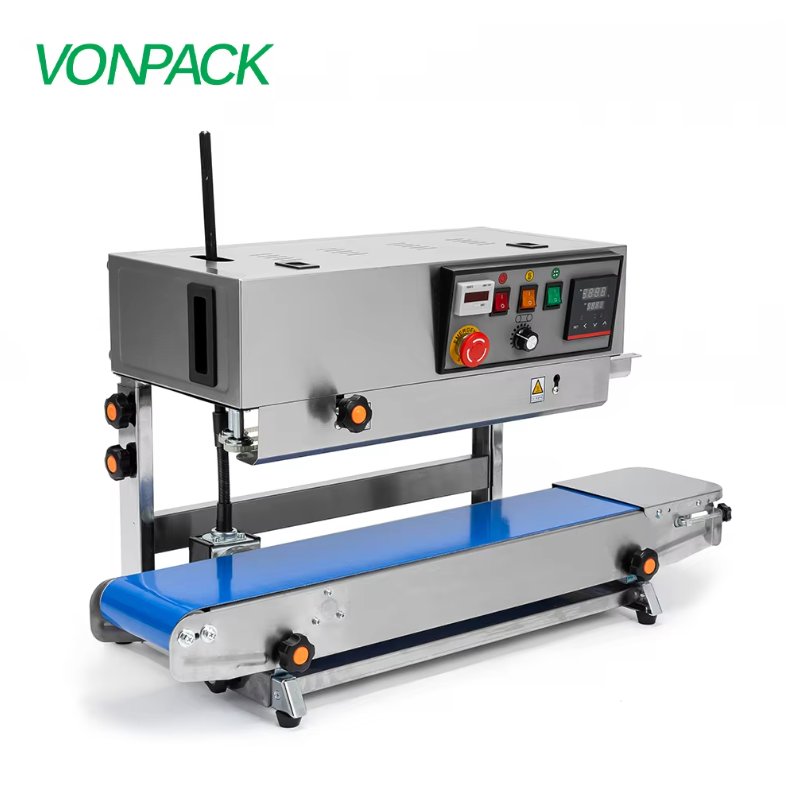
Why Bag Thickness Changes Everything
A sealing machine does not care about the brand name on the bag. It cares about how much material it has to heat through to form a bond. Bag thickness, usually measured in mil or microns, determines how much heat energy and how much dwell time are needed to melt the seal layer without burning through the outer layers. A setting that works perfectly on a two mil bag will barely touch a six mil bag. A setting that works on a six mil bag will melt straight through a two mil bag and leave a hole. That is the core challenge. The operator has to match the machine parameters to the material, and the material varies more than most people expect across a normal production day.
Understanding Seal Layer Versus Total Thickness
Not all of the bag thickness participates in the seal. Most packaging films are multilayer structures with a sealant layer on the inside, a structural layer in the middle, and sometimes a print or barrier layer on the outside. Only the sealant layer needs to reach its melting point. The structural layers need to stay intact. This is why total thickness is only part of the picture. A five mil bag with a thick sealant layer may seal more easily than a four mil bag with a thin sealant layer and a heavy outer layer. Knowing the film construction matters as much as knowing the total thickness, and suppliers should be able to provide that information.
Adjusting Temperature, Pressure, and Dwell Time
The three main parameters work together, and changing one usually means adjusting the others. A few practical guidelines help.
-
Thicker bags need higher temperature or longer dwell time, not both at once.
-
Pressure should be enough to ensure contact but not so much that it squeezes the melted sealant out of the seal zone.
-
Dwell time is often the safer variable to adjust, since it gives heat time to penetrate without overheating the surface.
-
Cooling time matters too, because a seal that is handled too soon will fail even if it looked perfect.
-
For very thick bags, preheating the seal bar can help without pushing the temperature setpoint higher.
The table below gives starting points for common bag thicknesses. These are starting points, not fixed rules, because film composition varies.
| Bag Thickness | Typical Temperature Range | Typical Dwell Time | Typical Pressure |
|---|---|---|---|
| 2 mil | 120 to 140 C | 0.5 to 0.8 seconds | Low to moderate |
| 3 mil | 130 to 150 C | 0.8 to 1.2 seconds | Moderate |
| 4 mil | 140 to 160 C | 1.0 to 1.5 seconds | Moderate |
| 6 mil | 150 to 170 C | 1.5 to 2.5 seconds | Moderate to high |
| 8 mil and above | 160 to 180 C | 2.0 to 3.5 seconds | High |
The pattern is consistent. Thicker material needs more heat energy delivered over a longer period.
The Role of Seal Bar Type and Width
The seal bar itself is a variable that many operators overlook. Impulse sealers use a resistive wire that heats only during the sealing cycle, which is well suited to thinner bags because the heat is brief and controlled. Constant heat sealers use a bar that stays at temperature, which handles thicker materials and higher throughput better. The width of the seal bar also matters. A wider bar spreads the pressure over more area, which can help with thick bags but requires more total force to achieve the same pressure. Matching the seal bar type and width to the bag range is part of setting up the machine correctly.
A Case Where Thickness Variation Caused Problems
At a food packaging operation that ran two product lines, one using three mil bags and one using six mil bags, the team was running both on the same machine with the same settings. The three mil line sealed well. The six mil line had a high failure rate, with seals that looked fine on the line but leaked in transit. The issue was not the machine. It was that the settings were tuned for the thinner material. After separating the two products onto different preset programs with different temperature and dwell settings, the six mil failure rate dropped to a normal level. The lesson is that a sealing machine is not a one setting device. It needs to be matched to the material, and switching between materials requires switching settings.
Where Thickness Limits What a Machine Can Do
It is worth being honest about limits. Every sealing machine has a maximum thickness it can handle reliably, and pushing beyond that limit produces inconsistent results regardless of how the settings are adjusted. A light duty impulse sealer that works well on two to four mil bags will struggle with eight mil barrier films. The heating element may not deliver enough energy, and the pressure mechanism may not be strong enough. For operations that need to seal a wide range of thicknesses, a machine rated for the thickest material in the range is usually the better choice, even if it is slower on thinner bags. The alternative is to run two machines, which adds floor space and cost.
How Manufacturing Experience Supports Reliable Sealing
A sealing machine is a precision tool, and its reliability depends on the quality of the heating element, the pressure mechanism, and the control system. Zhejiang Weipai Packaging Equipment was founded in 2010 and became a joint venture in 2020 involving Yongchuang Intelligence and Yougsun Pack Germany GmbH. The company focuses on the research, development, production, and sales of packaging machinery, and its inspection process is designed to reveal wear and tear before shipping. For operations that need consistent seals across a range of bag thicknesses, that combination of manufacturing experience and pre shipment inspection is what keeps the packaging line dependable.
Table of Contents
- Why Bag Thickness Changes Everything
- Understanding Seal Layer Versus Total Thickness
- Adjusting Temperature, Pressure, and Dwell Time
- The Role of Seal Bar Type and Width
- A Case Where Thickness Variation Caused Problems
- Where Thickness Limits What a Machine Can Do
- How Manufacturing Experience Supports Reliable Sealing