
 EN
EN
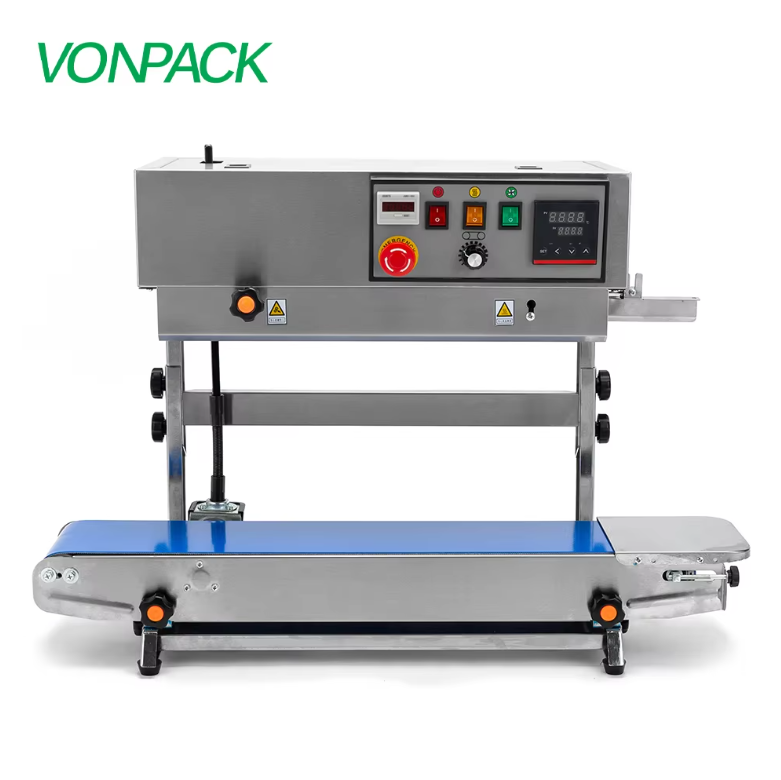
Pre-run checks that prevent most downtime
A sealing machine is only as good as the material and setup going into it. Before the first cycle, check the seal bar for residue, the film path for alignment, and the pressure gauges for stable readings. A worn PTFE cover or a loose thermocouple can cause weak seals that pass a quick look and fail later. Confirm the packaging material matches the machine settings. Different films need different temperatures and dwell times. A simple checklist taped near the control panel keeps small issues from becoming scrap.
Setting temperature, pressure, and dwell time
Three variables control seal quality. Temperature softens the polymer. Pressure bonds the layers. Dwell time lets the bond form. None of them work alone. A high temperature with low pressure creates a seal that looks fine but peels. Too much pressure can squeeze the film thin and weaken it. Dwell time that is too short leaves a cold seal. Standard operation means finding the window where all three work together for the specific film. Start with the film supplier's recommendation, then run a small trial and record the settings.
| Sealing method | Typical temperature | Pressure range | Dwell time | Common fault | Key check |
|---|---|---|---|---|---|
| Constant heat | 120 to 200 C | 0.2 to 0.6 MPa | 0.5 to 2 s | Burn-through | Thermocouple accuracy |
| Impulse | 100 to 180 C | 0.1 to 0.4 MPa | 0.3 to 1.5 s | Weak seal | Cooling time |
| Ultrasonic | Not applicable | 0.1 to 0.5 MPa | 0.1 to 0.8 s | Over-welding | Horn wear |
| Induction | 150 to 250 C | 0.3 to 0.8 MPa | 1 to 3 s | Incomplete bond | Coil alignment |
These ranges are starting points. Actual values depend on film structure, thickness, and line speed.
Starting the sealing machine and first article inspection
Power up the machine and let it reach stable temperature. A cold seal bar can trick an operator into raising the setpoint, which then overheats. Once stable, run one or two test packs. Check the seal by pulling it apart by hand. For critical products, use a seal strength test such as ASTM F88, which measures peel strength of flexible barrier materials. If the seal holds and looks even, start production. If not, adjust one variable at a time. Changing temperature, pressure, and dwell time together makes it impossible to know what worked.
Monitoring the run and handling common faults
During production, watch for changes in seal appearance, film tension, and machine sound. A sudden increase in rejects usually points to drift in temperature, pressure, or film tension. Common faults include wrinkles, channels, and incomplete seals. Wrinkles often come from film misalignment or too much tension. Channels come from contamination in the seal area. Incomplete seals point to low temperature or short dwell time. Standard operation includes periodic checks, not just a start-up inspection. A quick visual check every 15 to 30 minutes catches drift before a full batch is wasted.
Shutdown and daily maintenance routine
At the end of a run, follow a shutdown sequence. 1. Turn off the heater and let the seal bar cool. 2. Release pressure. 3. Clean the seal bar and surrounding area with a soft brush or approved solvent. 4. Check for worn PTFE tape, loose wires, and debris. 5. Record the run settings and any issues. Daily maintenance extends machine life and keeps the next start-up predictable. A sealing machine that is cleaned and inspected daily runs more consistently than one that is only serviced when it fails.
Safety practices that keep operators out of trouble
Sealing machines combine heat, pressure, and moving parts. EN 415 covers safety requirements for packaging machinery, and standard operation should follow the manufacturer's lockout and guard instructions. Never reach into the seal area while the machine is powered. Use handles and tools for adjustments. Keep the work area dry and free of loose film. Train operators on emergency stops and hot surface warnings. Safety is part of every standard cycle.
In a snack food plant in the Midwest, a sealing machine began producing leakers after a film change. Operators had increased temperature to compensate for a slower line speed. The higher temperature burned the film and created pinholes. A review of standard operation showed the line speed had not been reset, and the temperature increase was unnecessary. Adjusting speed and returning to the original temperature solved the problem. The standard procedure had been skipped.
VONPACK builds packaging machinery with a focus on reliable operation and service support. The company's background in R&D and manufacturing helps buyers set up sealing machines that run consistently from the first shift. Standard operation is not a list of rules. It is the habit that keeps a sealing machine productive and predictable.