
 EN
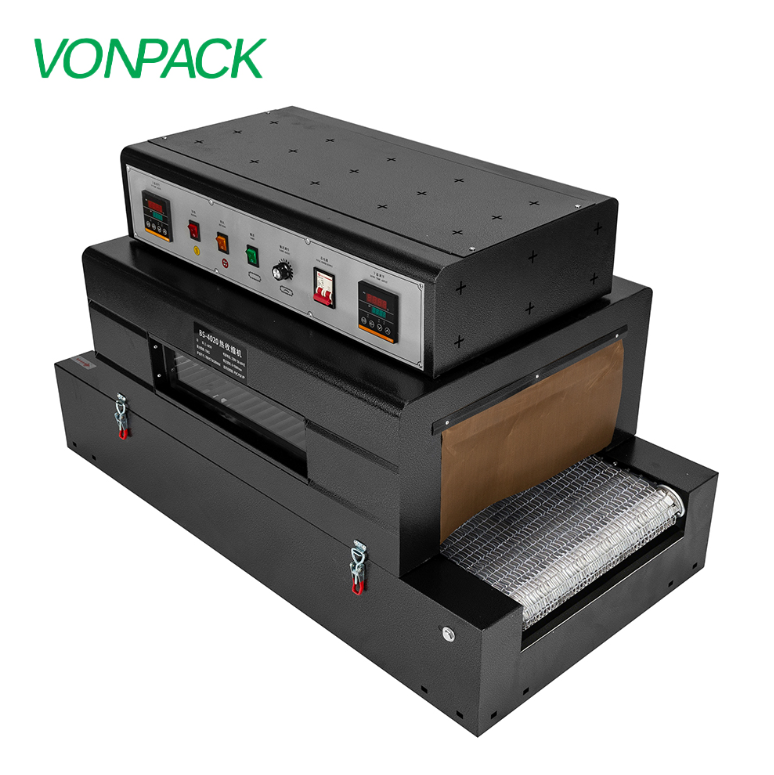
A Shrink Wrapper Is a Heat, Air, and Timing System, Not Just a Tunnel
A shrink wrapping machine does not simply blow hot air at plastic film. It coordinates film feed, product positioning, sealing, heat transfer, and cooling so film molecules relax and pull tight around the package. The working principle starts with a simple fact: most shrink films are stretched during manufacturing. Those stretched polymer chains want to return to a less oriented state. Heat gives them enough mobility to do it, while airflow and dwell time decide how evenly that return happens. A machine that controls temperature but ignores airflow often produces weak seals or loose bundles. A machine that rushes cooling can leave film shrinking after the package exits, which distorts labels and makes stacks unstable. The whole sequence matters, not just the tunnel temperature display.
From Wrapped Product to Sealed Package: The Mechanical Sequence
The mechanical sequence varies by machine style, but core steps repeat. 1. Infeed aligns products so they enter at a consistent pitch. 2. A film web is opened, folded, or wrapped around the product. 3. A sealing jaw or side sealer closes the film into a tube or envelope. 4. A knife cuts the film from the web. 5. The wrapped product transfers into the shrink tunnel. 6. A cooling conveyor stabilizes the film. On an L-sealer, the product often sits inside a folded film centerfold. A weak seal can open under shrink tension. Film tails can catch on conveyors. A gap or bump changes dwell time. Each mechanical action feeds the next, and small timing errors compound quickly.
Inside the Shrink Tunnel: Airflow, Temperature Zones, and Dwell Time
The tunnel is where the visible change happens. Heated air is circulated by fans through plenums and nozzles. The goal is not just high temperature. The goal is uniform heat transfer across the top, bottom, and sides of the package. Many tunnels use two or three temperature zones. An entry zone may soften the film gently, a middle zone drives shrinkage, and an exit zone begins stabilization. Conveyor speed sets dwell time. If speed increases, the film may not reach its shrink temperature. If speed decreases, the film can over-shrink or seal lines can pull apart. Air velocity matters too. Too little airflow creates cold spots. Too much airflow can blow lightweight products off pitch. In a retrofit at a chemical plant in southern China, a line packing 5 L jugs kept getting wrinkled labels at the tunnel exit. The temperature was within the film supplier's range, but the exit zone had low air velocity. After adjusting nozzle angles and adding a short ambient cooling conveyor, the wrinkles disappeared without changing the film gauge.
Why Film Type Changes Everything at the Settings Panel
Film chemistry and construction set the practical window. POF, PVC, and PE shrink films do not behave the same way. POF often offers good clarity and balanced shrinkage, PVC shrinks at lower temperatures but raises environmental questions, and PE provides toughness for heavier loads but usually needs more heat. Thickness, orientation, and additives shift the numbers. A 15 micron POF film may run at a different tunnel setting than a 19 micron film, even if both are called shrink film. The table below shows typical starting ranges, not universal recipes. Real settings must be verified with the actual film lot, product mass, and package geometry.
| Film type | Typical thickness | Tunnel temperature range | Dwell time tendency | Shrink behavior | Common fit |
|---|---|---|---|---|---|
| POF | 12 to 19 micron | 140 to 160 C | Short to medium | Balanced, high clarity | Retail multipacks, boxes |
| PVC | 15 to 25 micron | 120 to 150 C | Short | Fast shrink, low temperature | Budget sleeves, simple shapes |
| PE | 30 to 100 micron | 160 to 200 C | Medium to long | Tough, high force | Heavy bundles, industrial packs |
Common Missteps That Show Up on the Production Floor
Several problems repeat across factories. 1. Chasing temperature alone when the real issue is airflow or dwell time. 2. Using film outside its specified shrink direction, so the package curls instead of tightening. 3. Setting sealing pressure too low, then blaming the tunnel for open seams. 4. Running lightweight products at high fan speed, which causes shifting and inconsistent wrap. 5. Skipping cooling, so film continues to tighten after the package leaves the tunnel. A useful diagnostic order is simple: verify the seal, verify film orientation, verify airflow, verify dwell time, then adjust temperature. Standards such as ASTM D2732, which covers unrestrained linear thermal shrinkage of plastic film, give a laboratory reference point. Production still needs floor-level checks because a free-shrink test does not fully reproduce a package under tension.
Matching the Machine to the Real-World Packing Job
No single shrink wrapping machine principle fits every product. A sleeve wrapper with a long tunnel handles long boxes well but may struggle with tall, unstable items. An L-sealer gives flexible wrapping for odd shapes but can become a bottleneck at high speed. A side-seal machine can run continuously, yet film waste and seal quality depend on mechanical alignment. The honest limitation is that shrink packaging works best when the product can tolerate heat, the film can grip the shape, and the line can maintain consistent pitch. Products with heat-sensitive coatings, extreme weight variation, or open liquids need extra engineering. For buyers, the practical question is not only tunnel length or conveyor speed. It is how well the sealing system, film control, airflow design, and transfer mechanics work together. VONPACK supports that system view through manufacturing depth, component inspection before shipment, and supply chain coordination, which helps keep a shrink packaging line predictable after installation.
Table of Contents
- A Shrink Wrapper Is a Heat, Air, and Timing System, Not Just a Tunnel
- From Wrapped Product to Sealed Package: The Mechanical Sequence
- Inside the Shrink Tunnel: Airflow, Temperature Zones, and Dwell Time
- Why Film Type Changes Everything at the Settings Panel
- Common Missteps That Show Up on the Production Floor
- Matching the Machine to the Real-World Packing Job